Exploring New York City
As “The City That Never Sleeps,” New York City is renowned for its vibrant culture, world-class entertainment, rich history, and contemporary way of life.
Top Attractions in New York City
The Statue of Liberty
There are few sights on Earth as recognizable as the Statue of Liberty. Stunning views of the cityscape can be seen by visitors who take a ferry ride to Liberty Island.
France presented it to the US in 1886 as a gift to mark the centennial of American independence and as a symbol of democracy and freedom; its official title is Liberty Enlightening the World. It is still a symbol of optimism for immigrants coming to the United States and one of the most famous landmarks in the world.
Background and layout
The idea for the monument came from French historian Édouard de Laboulaye, and sculptor Frédéric Auguste Bartholdi was responsible for its design and construction. Gustave Eiffel was responsible for the steel framework. Built in Paris from 1875 to 1884, it was taken apart, transported to New York, and put back together on a pedestal that American architect Richard Morris Hunt had built. The distinctive green patina on the statue’s copper skin is the result of spontaneous oxidation; the skin was originally reddish-brown.
Key Concepts
Libertas, the Roman goddess of liberty, is personified by Lady Liberty. In her left hand is a tablet that displays the date July 4, 1776—the signing of the U.S. Constitution—while her torch represents enlightenment. Independence Proclamation. Abolition of slavery and tyranny is symbolized by the broken chains at her feet. The universality of liberty is emphasized by the seven rays of the statue’s crown, which represent the seven continents and seas.
Importance within society
An everlasting beacon for immigrants arriving through Ellis Island, the Statue of Liberty has stood since its dedication by President Grover Cleveland. Emma Lazarus’s sonnet “The New Colossus,” composed in 1883, rests atop the pedestal. The lines that made the statue famous, “Give me your tired, your poor…”, solidified the connection between the statue and safety and opportunity. It has been and will be a symbol of freedom and equality for people all across the world.
Maintenance and exploration
Included in the Statue of Liberty National Monument, which is overseen by the National Park Service, the site comprises the Statue of Liberty Museum as well as the adjacent Ellis Island National Museum of Immigration. Statue City Cruises operates permitted ferries that can be boarded from either Battery Park or Liberty State Park, providing access. Careful maintenance has ensured that the monument’s structural and symbolic integrity have been preserved since its centennial in 1986, when it received extensive restorations.
“Nature in the City – Central Park“
In the very heart of Manhattan lies a vast park known as Central Park. Away from the rush and bustle of the city, it’s ideal for strolls, bike rides, picnics, and more.
Park in the City
New York City’s Central Park is one of the city’s most expansive parks. Spanning 843 acres, it is one of the world’s most well-known and often visited public parks, providing a large green space away from the city’s busy cityscape and a focal point for leisure and culture.
Background and Architecture
Central Park was planned by landscape architects Frederick Law Olmsted and Calvert Vaux in the middle of the nineteenth century to serve as a public open space for the city’s inhabitants. In 1857, work began to transform the once swampy and rocky landscape into a network of lakes, woodlands, and meadows. Influencing Park design all around the globe, the park was an early adopter of the concept of a big, democratic urban greenspace.
Scenery and Attractions
Gardens, naturalistic forests, and pastoral meadows all come together in Central Park’s scenery. The Great Lawn, Ramble, Sheep Meadow, and Jacqueline Kennedy Onassis Reservoir are some of the highlights. Curving walkways and bridges were meant to divide pedestrian, horse, and carriage traffic, while architectural monuments like Belvedere Castle, Bethesda Terrace, and Bow Bridge complement the surroundings.
Recreational and Cultural Functions
The Delacorte Theater and the Central Park Zoo are two of the park’s most prominent venues for performances, exhibitions, and concerts. Visitors and locals alike can enjoy the many recreational opportunities year-round, including boating, ice skating, running, and cycling.
Administration and Maintenance
New York City’s Central Park Conservancy and the Parks and Recreation Department have worked together to maintain the park since 1980. By restoring the park’s landscapes, improving upkeep, and ensuring sustainable stewardship, this nonprofit has contributed to Central Park’s continued status as one of the world’s most famous urban parks.
Metropolitan Museum of Art – A Priceless Cultural Relic
The Met, one of the world’s greatest museums, houses works of art spanning many centuries and cultures.
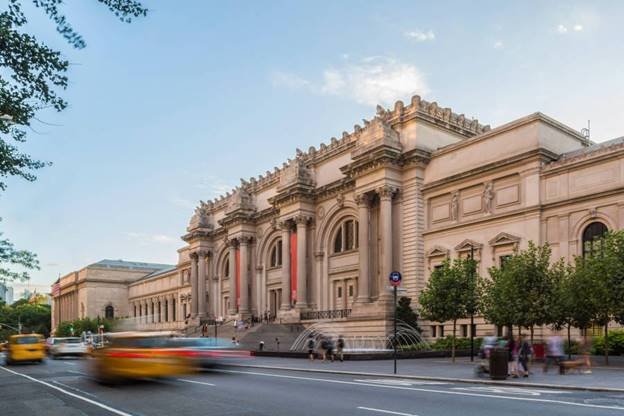

Museum of Modern Art
Located on Fifth Avenue in New York City, beside Central Park, stands the world-renowned Metropolitan Museum of Art, more commonly known as The Met. With more than two million pieces covering five thousand years of human history, it is home to one of the world’s most extensive art collections, which dates back to 1870. It ranks high among American cultural institutions in terms of attendance. (On display at the Met)
Highlights and collections
The Met’s extensive collection includes artworks from all around the world, from prehistoric times to the present day. A brilliant Arms and Armor Hall, American paintings such as Leutze’s Washington Crossing the Delaware, and European masterworks by Rembrandt, Vermeer, and Van Gogh are among the notable features. The Temple of Dendur, an Egyptian temple from the Roman era that was moved to New York stone-by-stone, is also worth mentioning. Major cross-cultural artistic traditions are showcased in its Islamic, Asian, African, and Oceanic galleries. via gocity.com
Annually, the Met Gala—which is attended by celebrities—spotlights the museum’s Costume Institute, which elevates fashion as an art form. Roof Garden, which features sculptures that change with the seasons and offers views of the cityscape, and the Musical Instruments collection complete the tour.
Design and related fields
The Great Hall and massive Fifth Avenue façade of the Richard Morris Hunt–designed structure make a striking entry in the Beaux-Arts style. The Met Cloisters, located in Fort Tryon Park, is the museum’s second site. It showcases art and architecture from medieval Europe, including reconstructed monastery courtyards and the world-renowned Unicorn Tapestries on display. (On display at the Met)
Access details
Aside from important holidays, the Met is open from 10 a.m. to 5:30 p.m., Friday and Saturday till 9 p.m. Visitors have the option of self-guided tours, mobile apps, or programs conducted by docents to explore the site. On any given day, you can visit both The Met Cloisters and The Met Fifth Avenue with only one ticket. The sheer size and popularity of the museum make online preparation a must. via gocity.com
New York City’s heart Times Square
Visitors to New York City who have never been to Times Square before must see the iconic area’s dazzling lights and billboards.
Central Park
Located at the intersection of Broadway and Seventh Avenue in Midtown Manhattan, Times Square is a thriving commercial and entertainment district in New York City. Known as “The Crossroads of the World,” it continues to represent the vibrancy and brilliance of New York City and is among the most popular tourist destinations in the world. (The Britannica Online)
The past and the present
When the New York Times established its headquarters in what is now known as One Times Square in 1904, the neighborhood was rechristened Times Square from its original name, Longacre Square. Broadway shows and neon signs became instantly recognizable landmarks in the area in the early 20th century. Major restoration initiatives in the 1990s, supported by city officials and the Times Square Alliance, turned it into a tourist-centered, family-friendly spot after a period of decline in the 1970s and 1980s characterized by adult entertainment and crime. (The Britannica Online)
Visual character and ambiance
The iconic electric billboards and digital screens that have been a fixture of Times Square since the 1920s are a sight to behold. Building occupants are obligated to keep the advertising façades lit at all times in accordance with the law. A continual spectacle typifying the vitality of New York City is created by the pedestrian plazas, costumed street entertainers, and the continual movement of people. (The Britannica Online)
Importance within society
Millions of people across the world tune in to witness the ball drop at One Times Square on New Year’s Eve. The Broadway Theatre District, which hosts numerous internationally acclaimed performances, is anchored by the square, which also showcases public art programs selected by the Times Square Arts initiative. The site is a symbol of urban life around the world and a civic monument due to its ever-changing blend of business, culture, and spectacle. the timessquarenyc.org).
The Brooklyn Bridge – A Beautiful View
Stunning vistas of Brooklyn and Manhattan can be yours when you stroll across this ancient bridge.
The Brooklyn Bridge
Across the East River, the New York City boroughs of Manhattan and Brooklyn are joined by the historic Brooklyn Bridge, a suspension bridge. It is still a prominent architectural feature of the city today, having been completed in 1883 as the first steel-wire suspension bridge.
Crucial information
Premiered: May 24, 1883
The work was finished by Washington Roebling and designed by John A. Roebling.
Approximately 4,862 meters long, or 1,595 feet in length
Type: Bridge with a combination of cable stays and suspension
Site: New York City, spanning the East River
Building and Design
It was groundbreaking for its time, but the bridge’s design included cable-stayed and suspension engineering components. After his father John A. Roebling passed away, his son Washington Roebling took over as supervisor of construction. Emily Roebling, Washington’s wife, performed an essential supervision role and made substantial contributions to the project’s completion when her husband fell ill. New York’s skyline isn’t complete without the neo-Gothic granite buildings.
Technical Importance
The Brooklyn Bridge, when finished, was an impressive feat of civil engineering and the longest suspension bridge in the world. It used steel-wire cables, which were novel at the time and offered unmatched strength and flexibility. Workers were subjected to “caisson disease,” an early concept of decompression sickness, as a result of the novel solutions used to operate in deep riverbeds during its construction, which included pressurized caissons.
Effects on Culture and History
In a short amount of time, the bridge came to represent American innovation and urban renewal. Before Brooklyn was formally incorporated into New York City in 1898, it served to unite the two cities of Manhattan and Brooklyn, which had previously been distinct. In addition to being a practical transportation route, it has become a cultural symbol thanks to its appearance in innumerable films, photos, and artworks.
Present Situation
Every day, thousands of people use the Brooklyn Bridge, which is a popular destination for pedestrians, bikers, and drivers alike. In order to keep it standing as a National Historic Landmark and an emblem of New York’s everlasting invention, it was heavily restored in the 21st century to keep its structure intact and make it suitable for modern use.
New York City Cultural Events
Broadway shows are available for live viewing.
The Broadway
Midtown Manhattan, New York City’s historic Broadway is a cultural icon and the beating center of America’s theater industry, renowned around the world. Near Times Square, in the Theater District, stands the world’s preeminent commercial theater, where musicals and plays are judged.
Crucial information
Place: New York City’s Midtown
Critical corridor: 41st–54th Streets, bounded by Sixth and Eighth Avenues
Call it “The Great White Way” if you will.
The Shubert, New Amsterdam, Majestic, and Lyceum Theaters are notable locations.
Hub for public transportation: served by numerous lines of the New York City Subway
Background and development
Tracking an ancient Lenape trail through the island, Broadway predates Manhattan’s grid system from the 19th century. The road transformed into a commercial thoroughfare as New York City grew northward over the nineteenth century. With the proliferation of theaters in and around Times Square in the late 19th and early 20th centuries, Broadway became the beating heart of American show business.
The architectural and theater districts
More than 40 venues with capacities of 500 or more are located in Broadway’s Theater District. Many of these neon marquees have Beaux-Arts or Art Nouveau elements and date back to the early 1900s. The interiors and exteriors of these buildings showcase a century of refined stagecraft that has been meticulously preserved.
Importance within society
Leonard Bernstein and Stephen Sondheim are only two of the many current musical theater composers whose works have flourished on Broadway. Stage productions such as Hamilton, West Side Story, and The Phantom of the Opera have elevated it to the level of a byword for artistic brilliance. Its narrative, choreography, and live orchestras have had and will have a lasting impact on the theater industry around the globe.
Dropping by today
The area around Times Square is always bustling with activity as people enjoy dinner, shows, and strolls under the illuminated signs. Major subway lines run through the neighborhood, making it convenient for pedestrians. New York’s “Great White Way” isn’t complete without visiting neighboring attractions like Bryant Park, Rockefeller Center, and Radio City Music Hall, which are open to the public in addition to performances.
Travel from NYC to Washington, D.C.
Making the trip between NYC
New York City
A common abbreviation for “New York City,” this is the biggest and most consequential city in America. The city is a cultural, artistic, financial, and media mecca situated at the mouth of the Hudson River in southeastern New York (state). The metropolis that never sleeps—”the Big Apple”—influences global business and artistic trends. (The Britannica Online)
Crucial information
First established in 1624 (under the name New Amsterdam).
The population was approximately 8.8 million according to the 2020 census.
Municipalities: New York City, Brooklyn, Queens, The Bronx, and Staten Island
Extent: 305 square miles (790 kmµ)
New York City Government official Eric Adams has been serving as mayor since 2022.
Physical characteristics
Connected by bridges and tunnels, New York City extends across multiple islands and a tiny portion of the mainland. The corporate heart and towers of Manhattan, the ethnic communities of Queens, the cultural legacy of the Bronx, the suburban tempo of Staten Island, and the creative neighborhoods of Brooklyn all retain their own unique identities within the five boroughs of New York City. The city’s vast metro system and ferry system link these varied neighborhoods. According to info-america-usa.com
Influence and economics
As the world’s premier financial, media, fashion, and technology hub, New York City is home to Wall Street and the New York Stock Exchange. As a symbol of its global importance, it is home to the United Nations Headquarters. With approximately 60 million tourists per year pre-pandemic, attracted by attractions like the Statue of Liberty, Central Park, and Times Square, tourism continues to be an important industry. (The Britannica Online)
Heritage and famous sites
Aside from Broadway’s theater culture, the city is renowned for its cultural institutions, which include the American Museum of Natural History, the Metropolitan Museum of Art, and the Museum of Modern Art. The Empire State Building and One World Trade Center are prominent landmarks on its skyline. New Year’s Eve in Times Square and the Macy’s Thanksgiving Day Parade are two annual events that capture the city’s celebratory mood. Go to the United States of America
Importance throughout history
When the British took over in 1664, the name changed from New Amsterdam, where the Dutch had originally resided, to New York. It grew as a hub for immigration through Ellis Island after briefly serving as the capital of the United States. Although the terrorist attacks on the World Trade Center in 2001 left an indelible mark on its history, they also prompted massive reconstruction and revitalization downtown. According to info-america-usa.com with the nation’s capital attached.
Washington, D.C.
In the nation’s capital? is located on the Potomac River, halfway between Virginia and Maryland, and serves as the nation’s capital. Housing the nation’s three arms of government, multiple embassies, and numerous monuments and museums, the District of Columbia—officially the United States Capital—serves as the nation’s political, cultural, and symbolic core.
Establishing and creating
In the nation’s capital? formed as a result of the Residence Act, a compromise reached by Thomas Jefferson, Alexander Hamilton, and James Madison, which created a permanent capital for the United States. The location was selected by President George Washington, and the city’s wide roads and ceremonial areas were constructed by engineer Pierre Charles L’Enfant, who was born in France. Officially, the federal government moved there in 1800. With the Capitol and the White House at its core, the city’s layout mirrored the democratic and orderly principles of the Enlightenment (Encyclopedia Britannica)
Officials and standing
The city shares its borders with DC and has its own distinct form of municipal government. Although the United States Congress maintains the right to veto laws passed at the municipal level, Washington has had an elected mayor and council since the Home Rule Act of 1973. In order to have a say in federal policymaking, locals have long pushed for statehood (Encyclopedia Britannica)
Cultural sites and landmarks
The National Mall is a famous park in Washington, DC, that connects the Lincoln Memorial to the United States Capitol. Along the Mall, you may see memorials honoring past presidents and wars as well as the Smithsonian Institution and the Washington Monument. Aside from its political significance, the city is known for its thriving arts scene, diverse neighborhoods, and historic universities such as Howard and Georgetown.
Contemporary progress
Renewal came to Washington in the 2000s, following a population fall in the late 20th century. Places like Navy Yard and Shaw were revitalized during this time. The government’s former monopoly on the economy has given way to a more diverse sector that includes IT, education, and tourism. A dynamic regional network connects the city to Maryland and Virginia, and the metropolitan area has more than six million citizens.
Top Attractions in Washington, D.C.
White House – Icon of Leadership
It is also the geographic and historical center of the United States.
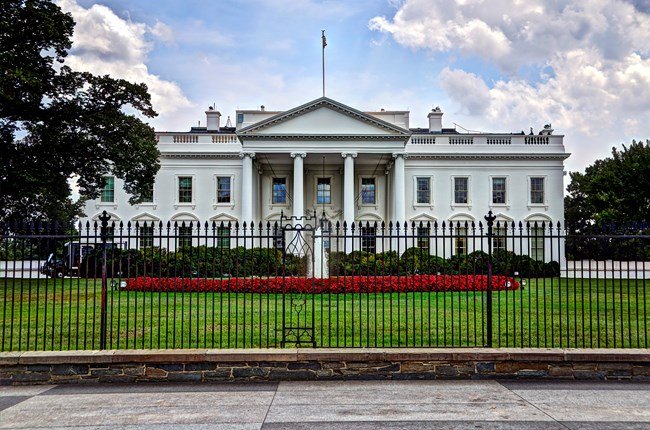
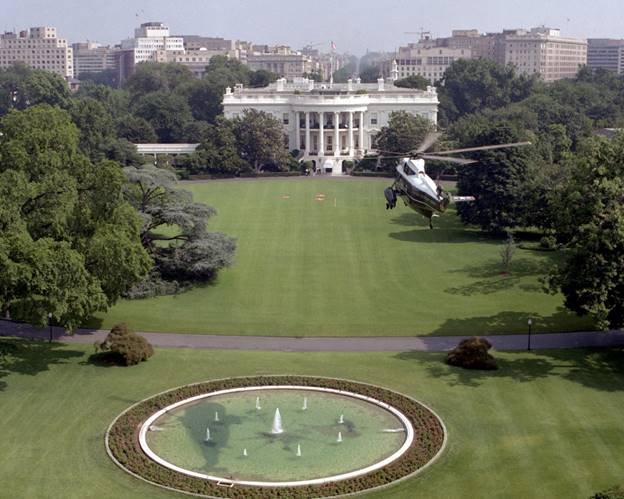
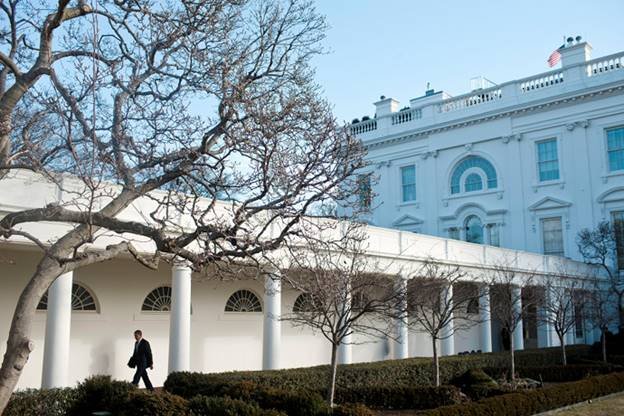
White House
There is a U.S. official home. President and one of the most famous buildings in the world. At 1600 Pennsylvania Avenue NW in Washington, D.C., stands the White House, the official residence and principal workplace of the President of the United States. It serves as the seat of the executive branch and is a symbol of global recognition of American leadership.
Design and its past
The architect James Hoban, who was born in Ireland, was chosen by George Washington to design the White House. The construction of the house took place from 1792 to 1800 and used white-painted Aquia Creek sandstone. The mansion’s first occupant was President John Adams. When Theodore Roosevelt took office in 1901, he formally changed the building’s name from the “President’s Palace” to the White House. There are a total of six stories to the mansion: the ground, first, second, and third floors, as well as two levels below ground
Building design and arrangement
Aside from the Ellipse and the accompanying gardens, the complex also includes the Executive Residence, the West Wing, and the East Wing. The East Wing is home to offices and the theater, while the West Wing is where the Oval Office, Cabinet Room, and Situation Room are located. The North and South Porticoes, which were constructed in the 1820s, are elements of the Neoclassical façade. Each exterior coat will need around 570 gallons of white paint due to the 132 rooms, 35 bathrooms, 412 doors, and 147 windows.
Public role and symbolism
The White House is more than just a place of business and living; it is a representation of democracy in the United States. The National Christmas Tree Lighting is just one of several public events held there each year, such with state occasions and visits from international dignitaries. It is still a working government building and a museum with limited public visits; it is part of President’s Park and is managed by the National Park Service.
Guests and the neighborhood
Public viewing areas that offer the finest views include the north side of Lafayette Park and the south grass of the Ellipse. The White House Visitor Center provides further information on the building and its inhabitants through displays and multimedia. There is no fee to enter the grounds, however visitors must pass through security checks (National Park Service)
The political center of the United States Capitol
The Capitol is both a representation of democracy and the place where laws are enacted.
The nation’s capital
Seated in Washington, D.C., the United States Capitol serves as the nation’s legislative hub. House of Representatives and a hallmark of American democracy. Located at the eastern end of the National Mall on Capitol Hill, it serves as the site of important national ceremonies and is home to the federal government’s legislative branch.
Background and building
On September 18, 1793, President George Washington lowered the cornerstone. A rotunda in the middle, with wings to the north and south, was William Thornton’s original plan. In 1800, it was the founding site of the Senate. The building was reconstructed and expanded under the supervision of architects Charles Bulfinch and Benjamin Henry Latrobe following its destruction by the British during the War of 1812. The current majestic silhouette of the Capitol was completed in the mid-nineteenth century by Thomas Ustick Walter, who incorporated the cast-iron dome and enlarged wings.
Visual arts and building design
Ancient Roman principles of civic virtue inspired the neoclassical style of the Capitol. The Statue of Freedom, a bronze sculpture by Thomas Crawford, stands atop its 287-foot (87-meter) dome (1863). Apotheosis of Washington and other historical paintings, such the Declaration of Independence, are shown in the Rotunda below. The National Statuary Hall Collection, which includes monuments to famous Americans from every state, is housed in the adjacent halls.
Meaning and representation
Congress meets at the nation’s capital. Senate and U.S. Rotunda, which hosts state burials and presidential inaugurations, is also used by the House of Representatives. It is a living symbol of the United States of America, a museum of art and history, and an active workplace all rolled into one (National Park Service)
Dropping by today
The United States is the public access point. Opening in 2008, the Capitol Visitor Center is a subterranean building that connects to the Library of Congress and offers exhibits, guided tours, and more. Independence Day concerts and presidential inaugurations are just a few of the big public events that take place on the landscaped Capitol Grounds, which were designed by Frederick Law Olmsted (visitthecapitol.gov).
Historic Monument – Lincoln Memorial
Dedicated to Abraham Lincoln and serving as a significant historical site.
Lincoln Park
Washington, D.C. is home to the Lincoln Memorial, a neoclassical structure dedicated to the 16th U.S. president, Abraham Lincoln. It has been a national shrine and a platform for the principles of equality, freedom, and unity in the United States since its dedication in 1922. Because of its rich history and impressive architecture, it is one of the most popular tourist destinations in Washington, DC.
Style and meaning
The monument, which is reminiscent of Athens’ Parthenon, represents the enduring power of democracy. Upon its 36 marble columns rests the names of the fifty-six states that were members of the Union when Abraham Lincoln died in 1865. The Piccirilli Brothers sculpted the 19-foot (5.8 m) statue of Abraham Lincoln from Georgia white marble, which was donated by Daniel Chester French. The monument is housed within. Murals by Jules Guerin portray reunion and emancipation, while inscriptions of Lincoln’s Gettysburg Address and Second Inaugural Address adorn the walls of the chamber.
Importance to society and the past
Many historic events that have come to define America have taken place at the Lincoln Memorial. In 1939, contralto Marian Anderson performed here after being excluded from Constitution Hall, and in 1963, Martin Luther King Jr. delivered his “I Have a Dream” address from its steps during the March on Washington. These actions confirmed the memorial’s status as a center of civil rights expression and peaceful assembly. It also appears on the reverse of the U.S. one-cent coin and the five-dollar bill.
Setting and tourist experience
Anchoring the western end of the National Mall, the memorial faces east across the Reflecting Pool toward the Washington Monument and the United States Capitol. Open 24 hours everyday, it offers breathtaking views—particularly at sunrise and after nightfall when illuminated. The surrounding area connects to nearby memorials, including those honoring Vietnam troops, Korean War veterans, and Martin Luther King Jr..Legacy
A century after its dedication, the Lincoln Memorial continues as a national emblem of unity and moral leadership. Its permanent presence continues to stimulate thought on democracy, equality, and the unfinished work of the values Lincoln championed. (National Park Foundation)
Smithsonian Institution – Free Museums
A collection of museums encompassing science, history, and culture – all free to visit.
Smithsonian Institution
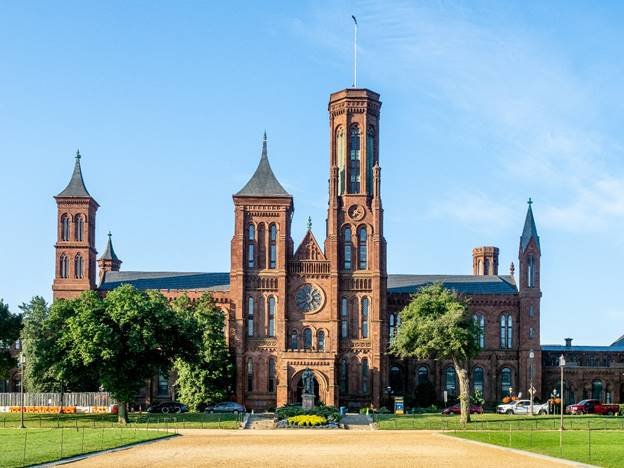
The Smithsonian Institution is the world’s biggest museum, education, and research complex, containing 21 museums, the National Zoological Park, and other research facilities. The nation’s capital is home to this cultural and scientific treasure, which attracts millions of tourists every year and contributes to the “increase and diffusion of knowledge.”
Purpose and Beginnings
An institution “for the increase and diffusion of knowledge” was established through a bequest from James Smithson (1765–1829). In 1846, Congress officially founded the Smithsonian, and in 1847, the cornerstone for its first building, the Norman-style Smithsonian Castle, was laid. Its worldwide scientific research and educational outreach are guided by its mission, which remains unchanged.
Association of Museums and Academics
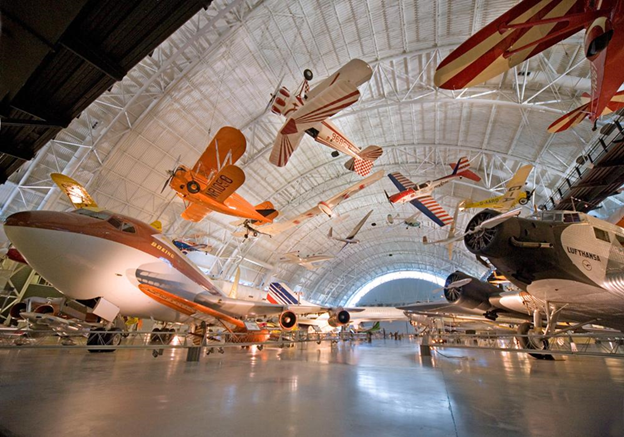
The National Mall is home to eleven Smithsonian museums, including famous ones like the National Museum of African American History and Culture, the National Museum of Air and Space, and the National Museum of American History. The Cooper Hewitt Design Museum in New York City and the National Zoo are two more locations. The Smithsonian runs fourteen research and education centers ranging from cultural anthropology to astrophysics, in addition to its displays.
Oversight and Finance
The Board of Regents, which includes the United States Vice President, the Chief Justice, members of Congress, and citizen appointees, oversees the Institution’s operations as a distinct public-private trust. Federal appropriations cover about half of its budget, while endowments, contributions, and earned income cover the other half.
Impact on a Global Scale
The Smithsonian Institution makes its collections and knowledge available to people all around the globe through its many digital projects, including Smithsonian Open Access, Smithsonian Affiliations, and partnerships with UNESCO. Through research, displays, and education, it inspires curiosity, documents cultural heritage, and preserves biodiversity.
Washington Monument
A majestic building honoring George Washington that provides breathtaking views metropolis
Monument on Washington Island
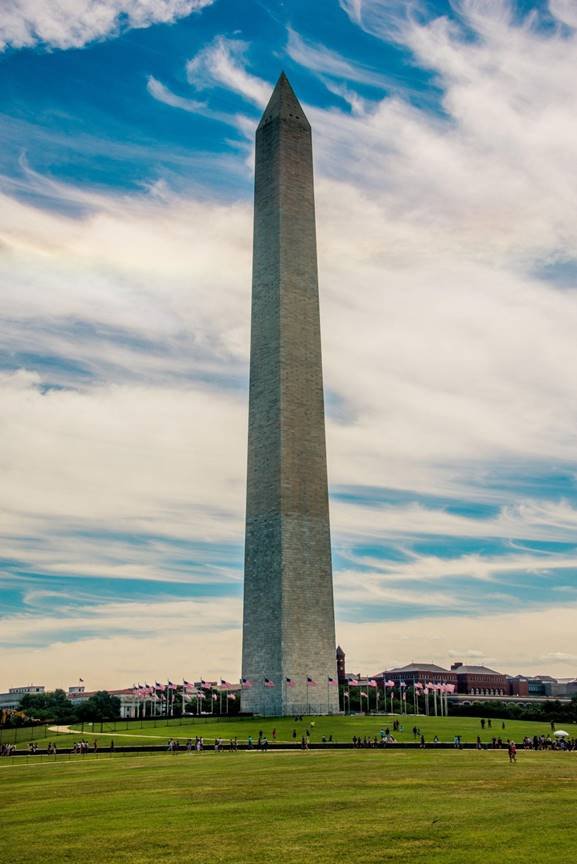
On the National Mall in Washington, D.C. stands the Washington Monument, a famous obelisk that pays tribute to George Washington, the first president of the United States and chief executive officer of the Continental Army. Standing prominently between the U.S. Along with the Lincoln Memorial and the Capitol, it is among the most prominent symbols of the nation’s capital.
Building and Design
The monument, which was designed by architect Robert Mills, is reminiscent of ancient Egyptian obelisks, which represent unbreakable bonds and strength. Starting in 1848, construction was interrupted in 1854 by a lack of funds and the Civil War. It was not until 1879 that work was resumed. The higher section was finished with stone from a different quarry, and the noticeable shift in hue of the marble shows the pause in building.
Significance and Function
The memorial, which was intended to honor George Washington’s leadership and personality, represents the appreciation and solidarity of the nation. Its lofty stature and geometric simplicity pay enduring homage to republican virtue and its founding.
Repair & Open Access for All
In order to improve structural safety and tourist access, significant restorations were carried out following incidents like the 2011 earthquake and the 2019 elevator update. Elevator or stairs take you to the observation deck, where you may take in breathtaking views of the nation’s capital, the Potomac River, and the memorials in the vicinity.
Importance to Culture and the Nation
In addition to being a permanent memorial to American values, the Washington Monument is the site of many national festivities. As a focal point for public gatherings and contemplation, it serves as an axial anchor for the National Mall and connects it symbolically to the Capitol and the Lincoln Memorial.
Cultural Highlights in Washington, D.C.
National Mall Experience
Historic monuments and museums line the National Mall, an open area with a rich history. On foot, you can learn a great deal about the past of the United States.
Important Museums to See
Space and Air Museum
Both the Smithsonian Institution’s Natural History Museum and the Smithsonian American Art Museum receive millions of visitors annually.